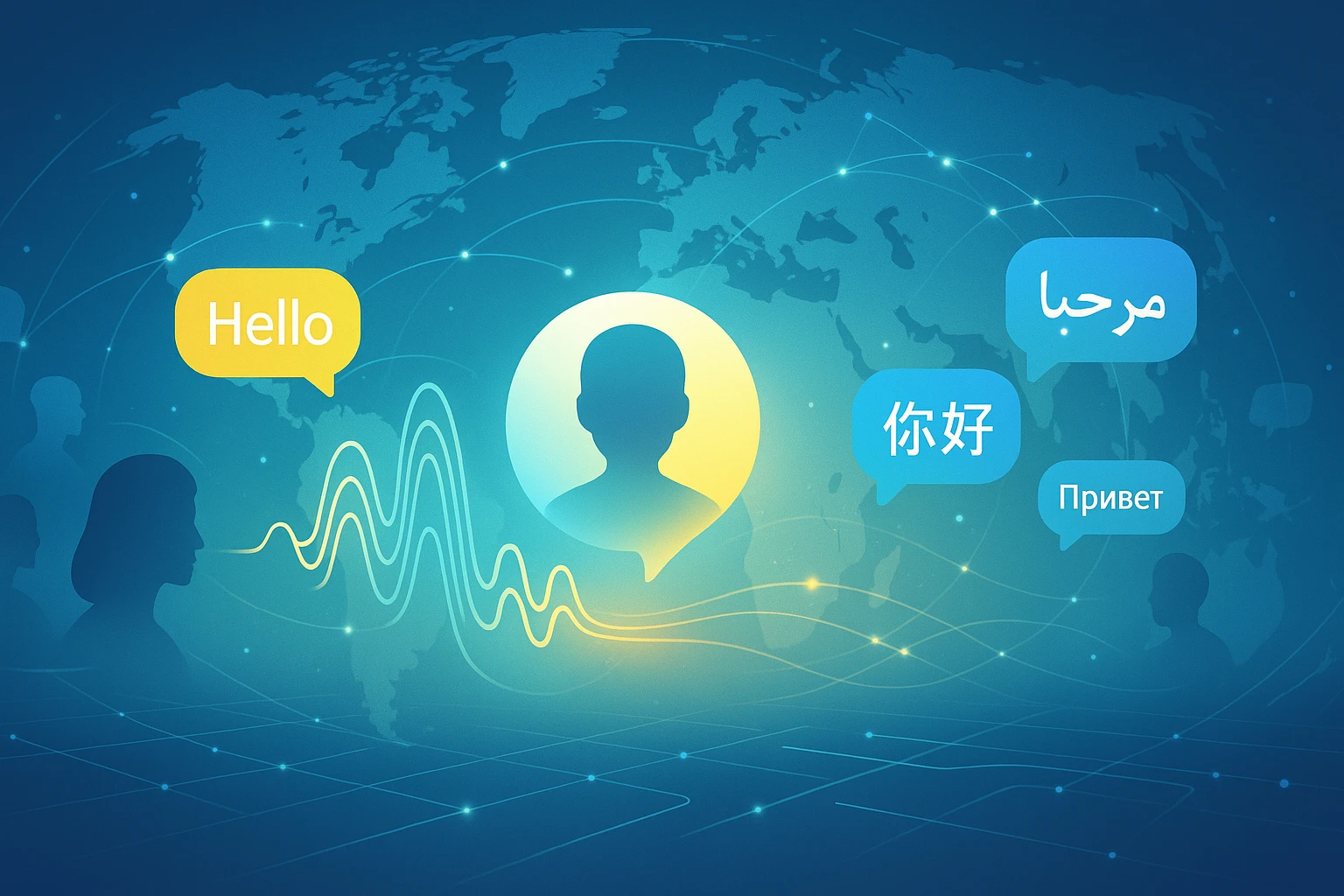
In today’s hyper-connected world, businesses are no longer सीमित by borders—and neither are their customers. From e-commerce to fintech, companies are serving global audiences who speak dozens of different languages. This is where Voice AI in multilingual customer service is stepping in as a game-changer.
Why Multilingual Voice AI Is Becoming Essential
Imagine calling customer support and being instantly understood—in your native language—without waiting for a human translator. Sounds ideal, right? That’s exactly what AI-powered voice translation is making possible.
Traditional customer service models relied heavily on human agents or basic chatbots. But with advancements in natural language processing (NLP), speech recognition, and real-time translation technology, Voice AI is bridging communication gaps faster than ever.
Businesses are now adopting multilingual AI solutions to improve customer satisfaction, reduce operational costs, and scale globally without friction.
How Voice AI Enhances Customer Experience
The magic of Voice AI lies in its ability to deliver real-time, human-like interactions. Here’s how it’s transforming customer service:
•Instant Language Detection: AI can identify a caller’s language within seconds.
•Seamless Translation: Conversations are translated in real-time without losing context.
•24/7 Availability: No more time-zone limitations or language barriers.
•Consistent Support Quality: Unlike human agents, AI maintains uniform service across languages.
For industries like travel, healthcare, and e-commerce, this means fewer misunderstandings and happier customers.
The Role of AI in the Translation Industry
The translation industry is undergoing a massive shift. Voice AI isn’t replacing human translators—it’s enhancing their capabilities. Businesses are combining machine translation with human expertise to deliver faster and more accurate results.
Technologies like speech-to-text translation, AI localization tools, and voice-enabled chatbots are redefining how companies communicate globally. This hybrid approach ensures both efficiency and cultural accuracy.

Challenges You Can’t Ignore
Of course, it’s not all smooth sailing. Voice AI still faces hurdles like:
•Handling regional accents and dialects
•Maintaining emotional nuance in conversations
•Ensuring data privacy and security
But with continuous innovation in AI language models and deep learning, these challenges are steadily being addressed.
What the Future Looks Like
So, where are we headed? The future of multilingual customer support is incredibly exciting.
We’re moving toward hyper-personalized voice assistants that not only understand language but also tone, intent, and emotion. Think of AI that can adapt its responses based on cultural context—almost like talking to a local expert.
As voice recognition technology becomes more sophisticated, businesses will be able to deliver truly borderless customer experiences.
Final Thoughts
The future of Voice AI in multilingual customer service isn’t just about technology—it’s about connection. It’s about making every customer feel heard, no matter what language they speak.
And honestly, in a world where customer experience defines brand success, can any business afford to ignore that?
FAQs
1. What is Voice AI in customer service?
Voice AI uses artificial intelligence to understand and respond to spoken customer queries, often in multiple languages.
2. How does AI help in the translation industry?
AI enables real-time translation, improves efficiency, and supports human translators with advanced tools.
3. Is multilingual Voice AI accurate?
While highly accurate, it continues to improve, especially with advancements in NLP and machine learning.
4. Can Voice AI replace human agents?
Not entirely. It complements human agents by handling routine queries and supporting complex interactions.
5. What industries benefit most from multilingual AI?
E-commerce, healthcare, travel, finance, and tech industries benefit significantly from multilingual customer support solutions.
 Gaming Computer
1 × $940.00
Gaming Computer
1 × $940.00
 Smartphone Vivo
V9 1 × $899.00
Smartphone Vivo
V9 1 × $899.00 SanDisk Flash
Drive 1 × $756.00
SanDisk Flash
Drive 1 × $756.00 Smart Power Bank
1 × $723.00
Smart Power Bank
1 × $723.00
 Apple Smartwatch
1 × $1080.00
Apple Smartwatch
1 × $1080.00




.jpeg)

.jpeg)